Cheese Making Workshop, January 14th

Basics of Home Cheese Making with Coyote Kitchen Workshops
Saturday, January 14th, 2:00 – 4:00 PM
at Kombucha Brooklyn, 906 Rt 28, Kingston, (845) 514-2911

$30, pay in person or online at KombuchaBK.com

Making cheese at home is a fun, easy and healthy project that anyone can do. While there are many books on cheese making with dense pages of precise directions, it is possible to make many simple cheeses in your own kitchen with nothing but high quality milk, rennet, cheesecloth and salt. Rather than focusing on making one particular cheese, this class will cover the creation of curds and the basic process of making three simple families of cheese — fresh cheeses, brined cheeses, and hard waxed cheeses. Students will leave with a greater understanding of cheese, and the knowledge to make homemade chevre, feta, and basic hard cheeses.
This workshop is a part of the Saturday DIY Fermentation Series at Kombucha Brooklyn. All classes are Saturdays, 2-4, and always 30$; or sign up for 6 classes for the price of five. Check out the whole schedule and links to their Facebook at KombuchaBK.com.

RESCHEDULED: Sake Making Workshop, Saturday January 21

Sake Making with Coyote Kitchen Workshops
Saturday, January 21, 2:00 – 4:00 PM
at Kombucha Brooklyn, 906 Rt 28, Kingston, (845) 514-2911
$30, pay in person or online at KombuchaBK.com

Join in making a large batch of sake, exploring the flavors imparted by different kinds of rice. Sake is a simple rice wine that is made with both yeast and Koji, the mold culture also responsible for miso paste and traditional soy sauce. Enjoy light homemade Japanese snacks as you learn the skills to make a batch your own of sake at home.

This workshop is a part of the Saturday DIY Fermentation Series at Kombucha Brooklyn. All classes are Saturdays, 2-4, and always 30$; or sign up for 6 classes for the price of five. In addition to the many other talented teachers offering classes, I will be teaching again at KBBK on January 14th, on the Basics of Homemade Cheese. Check out the whole schedule at KombuchaBK.com.

Fiddleheads (aka fernie sanders)

First of all –

I want us to pause and acknowledge that I just coined the term fernie sanders to describe these little green cuties. (#ferniesanders) (crowd chanting: fernie, fernie, fernie….)

Now, on to business –

Harvesting –

Make sure what you have found are indeed fiddlehead ferns. (plant ID book, tried and true spot, knowledgable friend, etc) They are best harvested when they are young and tightly curled, in the early spring. There is a bit of a window, a month or so, as each fern plant sends up many fern leaves in succession. Don’t bother with ones that are larger longer or starting to uncurl and leaf out. Also, do not cut too many shoots from any one plant. Scissors and a bag will do you well as you move kneeling through the ferns.

Eating / Preserving –

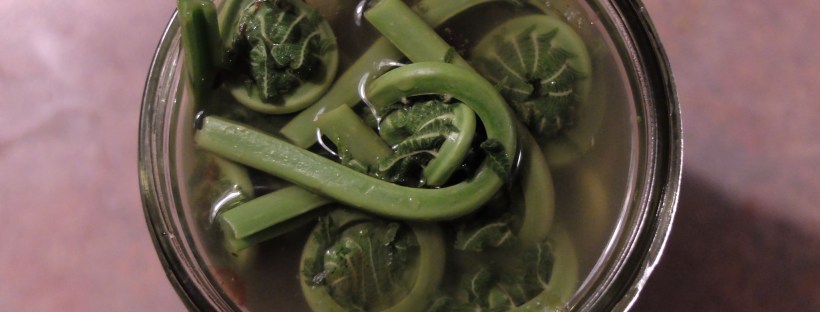
Trim the base of the stalk, freshening the cut. Blanch them — bring a pot of lightly salted water to a boil, turn it off, and toss in the curls. Give em 30 seconds before removing them quickly to a cold water bath for a minute or so. At this point, they are ready to cook and eat (cook em as you would green beans or other similarly sized morsels). Or, preserve them for later use. There are many ways to do this. I used a 4-1 water to apple cider vinegar ratio, with some whole black peppercorns thrown in. The jars were filled to the tippy-top with the pickling solution, which was just boiled hot, and then capped and flipped upside down to cool. This neat trick creates a seal as would a proper canning process. I prefer Lactofermentation whenever possible when preserving, but in this case I figured they would come out too soft and slimy. Vinegar pickling tends to yield a crisper result. Let em cool overnight and then store in a cool dark place or a fridge.

Goal for next year –

Transplanting some of these lil fernie sanders before they leaf out next spring, and trying to propagate some new groves for future harvest.